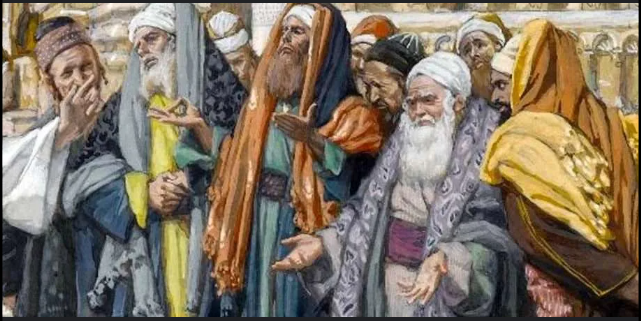
History has a profound impact on our beliefs, especially our understanding of the Bible. In my last post, I explored this idea. Now, prepare for another eye-opening look at how history can illuminate difficult biblical passages, and help us understand why the Pharisees and Sadducees rejected Yehoshua (Jesus) as the true Messiah.
In biblical times, the northern Kingdom of Israel was captured around 722 BCE by the Assyrian Empire. The southern Kingdom of Judah was later conquered in 586 BCE by the Babylonian Empire under King Nebuchadnezzar II. These conquests resulted in the exile of the Israelite and Judean populations to the respective empires. We can read about these invasions and why they came about in the Old Testament. God can only tolerate disobedience for so long before He does what He says He will.
Eventually, when you read the books of Ezra and Nehemiah that detail the later period of the return from exile, you will find the rebuilding of the community in Jerusalem, which is part of the history of Judah after its conquest. It seems the 10 tribes that were left from Israel scattered. This is why we only read of Judah’s return (the Jewish nation we know of today).
It was at this time that the Levitical priesthood took a hit. Ezra highlights the community’s acknowledgment that the Levites were essential for restoring proper worship. They were needed for duties such as preparing sacrifices, providing music, and teaching the Law. Years later, when the governor Nehemiah returned to Jerusalem, he discovered that the people had neglected their duties to provide the Levites with their required tithes and portions. This systemic failure meant the Levites could no longer support themselves. As a result, the Levites and temple singers were forced to leave their temple duties and return to their own fields and lands to earn a living. Eventually Nehemiah rebuked the officials for neglecting the temple and its servants. He recalled the Levites and reinstated them to their posts, ensuring their provisions were collected and stored as mandated by the Law.
I could go on into a lot more history but I’ll save some for you to research…now skipping ahead several hundred years we get to the Maccabean Revolt that occurred from 167 to 164 BCE in response to the Seleucid Empire’s oppression under King Antiochus IV Epiphanes, who sought to suppress Judaism by outlawing Jewish practices and forcing Hellenistic culture upon them. The revolt, led by the priest Mattathias and his sons like Judas Maccabeus, was ignited by the desecration of the Second Temple and the imposition of foreign religious customs. The successful revolt led to the recapture and rededication of the Jerusalem Temple.
It was during this time that two factions emerge, the Pharisees and Sadducees. The Pharisees emerged from the Hasideans or a group of scribes and sages around 165–160 BCE, likely in response to Hellenistic influence and the Maccabean Revolt. The Sadducees likely originated from the Zadokite priesthood, which had a long-standing tradition centered on the Temple and became allied with the aristocratic and wealthy elite. Their distinct identities solidified during the period of Hellenistic rule in Judea, as a rift developed between the priests and the scribes.
During these times there is what is know as the Oral Law and the Written Law. The Oral Law consisted of the teachings of the prophets and the oral traditions of the Jewish People. The Written Law was the law given to Moses on Mount Sinai in the Torah. The Pharisees believed in both the Oral Law and the Written Law. The Sadducees rejected the Pharisaic use of the Oral Torah to enforce their claims to power, citing the Written Torah as the sole manifestation of divinity. Jesus’s frequent use of ‘have you not read’ (referencing the Written Law) and sometimes ‘have you not heard’ (alluding to the interpretations of the Oral Law) becomes much clearer through this historical lens. He engaged directly with their different traditions.
Now we are caught up to Yehoshua’s time and before this gets to be a very long blog, lets skip to the part about why they didn’t believe in Yehoshua being the Messiah. Both believed in all the prophecies about the Messiah and all the signs they were to look for but what they believed was supposed to happen and what did turned into two different things. They were convinced that the true Messiah was coming in to “clean house” so to speak. “They firmly believed that the Messiah would be a strong and glorious earthly king who would deliver them from their Roman oppressors and form once again a great and independent Jewish kingdom” (The Messiah’s Misunderstood Mission).
Another contributing factor was that He taught differently then they had imposed on the people. They were looking for a Messiah that would side with them and their traditions instead of someone calling them out for their interpretations of law. They had added to the Law as to keep the people from not keeping God’s original intent of the law, which would result in them going back into captivity. There was also an abuse of power to gain wealth which was another thing that was being compromised by His teaching. So when Yehoshua didn’t teach as they did, they thought to themselves how can this be the Messiah when He isn’t teaching as we do.
This is what blinded them. Instead of recognizing all the prophecies of the coming Messiah, they thought for sure that God would want them to eliminate any one that didn’t teach as they did. A serious mistake both Christianity and Judaism make about the teachings of Jesus is that both hold the erroneous view that Jesus departed from the teachings of the Old Testament, especially with regard to law. Record shows that while Jesus disagreed with the religious leaders, He didn’t disagree with Old Testament Scriptures. This same record shows that traditional Christianity itself does not follow the teachings of Christ. But that’s another story in itself for another time.
Now I’m not putting the entire blame on the Pharisees and Sadducees, that is far from correct and unfortunately what most people believe. In a booklet called “Jesus Christ: The Real Story”, there’s a section “Who Killed Jesus?”. It’s a great read but the part I key in on is the section under “Who Bears the Blame?” It states…
This is the horrible truth we all want to avoid. What the original followers of Jesus are telling us is that no one is innocent of this crime. We all were complicit in the death of Christ. Paul was convinced of his personal guilt: “Here is a trustworthy saying that deserves full acceptance: Christ Jesus came into the world to save sinners—of whom I am the worst” (1 Timothy 1:15, NIV).
We all play a part in His death…
Yes, the Jewish leaders initiated the deed, and the Romans carried it out. But because each of us has sinned, He died for every single one of us. There’s nothing complicated about that. That’s what He wants us to see. If we had not sinned, if I had not sinned, He wouldn’t have had to die. If we weren’t so hardened, His suffering and death wouldn’t have had to be so horrendous. None of us are innocent of this crime. This is what Peter and Paul and John are trying to tell us.
This is more prevalent today then in the past, everyone wants to blame others for their faults. We need to see is as it is. There is no one group of people responsible, only ourselves. When we see this then we can understand the deeper meaning behind Yehoshua death and understand that He did this because there is no other way and because both Him and God the Father loves us so.
If you would like to know more, please read “Jesus Christ: The Real Story“. This wonderful booklet will go into full detail every aspect of His life and it helps us to see what true love looks like. If I hadn’t mentioned it before, all booklets linked here are free of charge if you like to have a physical copy of them, or you can download them or read them right online.
Till next time…I pray your journey is an inspiring one, and that all your questions are answered.
 Answered Scripture
Leave a comment