There are several passages in the Bible that most people interpret incorrectly. If you read my post on the “Past Vs. Present” blog, you will understand what I mean by trying to add today’s culture to the Bible instead of researching the culture of the time when the Bible was written. This blog will cover just one item related to the holiday of Christmas and its traditions that are instilled in it.
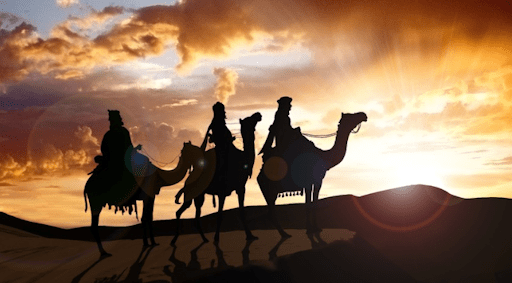
The Three Wise Men: Throughout history, we have been told that it was three wise men who came to visit on the night Yehoshua was born. Well, several things are incorrect about this tradition. The first being that Yehoshua was not an infant at the time of their meeting. Let’s read these passages together, starting with Matthew 2:1-4, “Now after Yehoshua was born in Bethlehem of Judea in the days of Herod the king, behold, wise men from the East came to Jerusalem, saying, ‘Where is He who has been born King of the Jews? For we have seen His star in the East and have come to worship Him.’ When Herod the king heard this, he was troubled, and all Jerusalem with him. And when he had gathered all the chief priests and scribes of the people together, he inquired of them where the Messiah was to be born.”
Between the first verse and the fourth verse above, we see “after Yehoshua was born,” followed by “where the Messiah was to be born.” Though the first definitely states He was already born, the last one makes it sound like this happened prior. To explain this, we need to really listen to what is said in that entire sentence. It states, “When Herod the king heard this”, talking about this king being born, he knew it was foretold in the scriptures. So he was inquiring of those chief priests and scribes to search the scriptures to see where Messiah was to be born, so he knew where to look.
The next one we need to examine is Matthew 2:8-11. It reads, “And he sent them to Bethlehem and said, ‘Go and search carefully for the young Child, and when you have found Him, bring back word to me, that I may come and worship Him also.’ When they heard the king, they departed; and behold, the star which they had seen in the East went before them, till it came and stood over where the young Child was. When they saw the star, they rejoiced with exceedingly great joy. And when they had come into the house, they saw the young Child with Mary, His mother, and fell down and worshiped Him. And when they had opened their treasures, they presented gifts to Him: gold, frankincense, and myrrh.”
This has a couple of things we need to unpack. Continuing with the thought that Yehoshua was an infant upon the arrival of the wise men, we see it stated three times, in verses 8, 9, and 11, that he was a “young child.” It does not say He was still an infant or newly born; it states young child. We also know that Herod had all male children slain from two years and younger, why? It’s because a great deal of time had passed between them showing up and not returning. One more thing in verse 11, they (Joseph, Mary, and Yehoshua) were no longer in the manger; they were living in the house.
Most people associate the wise men with only being three because of the gifts they brought. Let’s reread this part. Verse 11, “And when they had come into the house, they saw the young Child with Mary His mother, and fell down and worshiped Him. And when they had opened their treasures, they presented gifts to Him: gold, frankincense, and myrrh.” Now this is where you need history to know that there were more than three. Yes, three different types of gifts were presented, but there weren’t only three men presenting them.
Side note: The three gifts given to the child Yehoshua—gold, frankincense, and myrrh—symbolize key aspects of his identity: gold for his kingship, frankincense for his divinity and priestly role, and myrrh for his humanity, foreshadowing his suffering and death. These gifts, presented by the wise men, served as both valuable offerings and prophetic messages about Yehoshua’s purpose on Earth as King, God, and Savior. Gold is a precious metal that signifies royalty and wealth, symbolizing Yehoshua as the promised King of kings. Frankincense is an incense used in worship, symbolizing Yehoshua’s divine nature and his role as High Priest. And finally, myrrh, which is a spice used for anointing and embalming, foreshadowed Yehoshua’s sacrificial death and burial for humanity’s sins.
Now, back to the wise men being more than three. Traveling in those days would not be done in just groups of three. Roads were dangerous; larger groups of people provided protection from robbers and wild animals. The star also signified that they traveled at night. To avoid the extreme heat of the sun, travelers would often travel by night and get their direction from the stars. They would also do this to help escape detection from thieves who would hide beside the road, waiting to rob someone. They also had to beware of wild animals. Lions, leopards, and bears were just a few of the animals that lurked about, especially in the wilderness of Judea. For the most part, these types of animals hunted during the day and slept at night.
These men were called wise men. They are also called Magi. They were astrologers, so to speak, likely, but it’s unknown whether they were Persian/Babylonian (coming from the east), who studied stars to predict events, rather than kings. However, they were seen as wise men or magicians with exceptional knowledge of prophecy, guided by a new star to find the “King of the Jews” and offer homage. They were experts in astrology, dream interpretation, and magic, possibly familiar with Hebrew prophecies, such as those of Balaam, which led them to recognize Yehoshua as a significant figure.
How did they get to come in front of Herod, or why? Herod was a particularly paranoid king. If only three men were traveling into his kingdom, they would have passed through without a thought. The reason they came to the king was that they were a large group coming from the east, and would have raised a red flag, and would not have been able to pass through without being questioned about their presence, especially when it came to Herod. His paranoia led him to execute family members (like his wife Mariamne and sons) to protect his throne.
It comes down to the fact that the Magi were respected Eastern scholars (another reason why Herod was so interested in what they were doing) who recognized a cosmic sign pointing to the birth of a significant Jewish ruler, leading them on a pilgrimage to honor him. They traveled in groups for safety from bandits and wild animals, forming caravans for protection and efficiency. Joining together offered strength in numbers against threats and provided support for the arduous journey. We can observe what happens to people who travel alone, as seen in the story of the Good Samaritan. This is the main reason why there were more than three; the interpretation of only three is based on the number of gifts, not the actual number of gifts.
If you would like to learn more about the Christmas holiday and its origins, make sure to read Holidays or Holy Days: Does It Matter Which Days We Observe?
I pray your journey is an inspiring one and that all your questions are answered.
 Answered Scripture
Leave a comment